Download Poteau
Padel Team Guide 2026: Building a Winning Squad
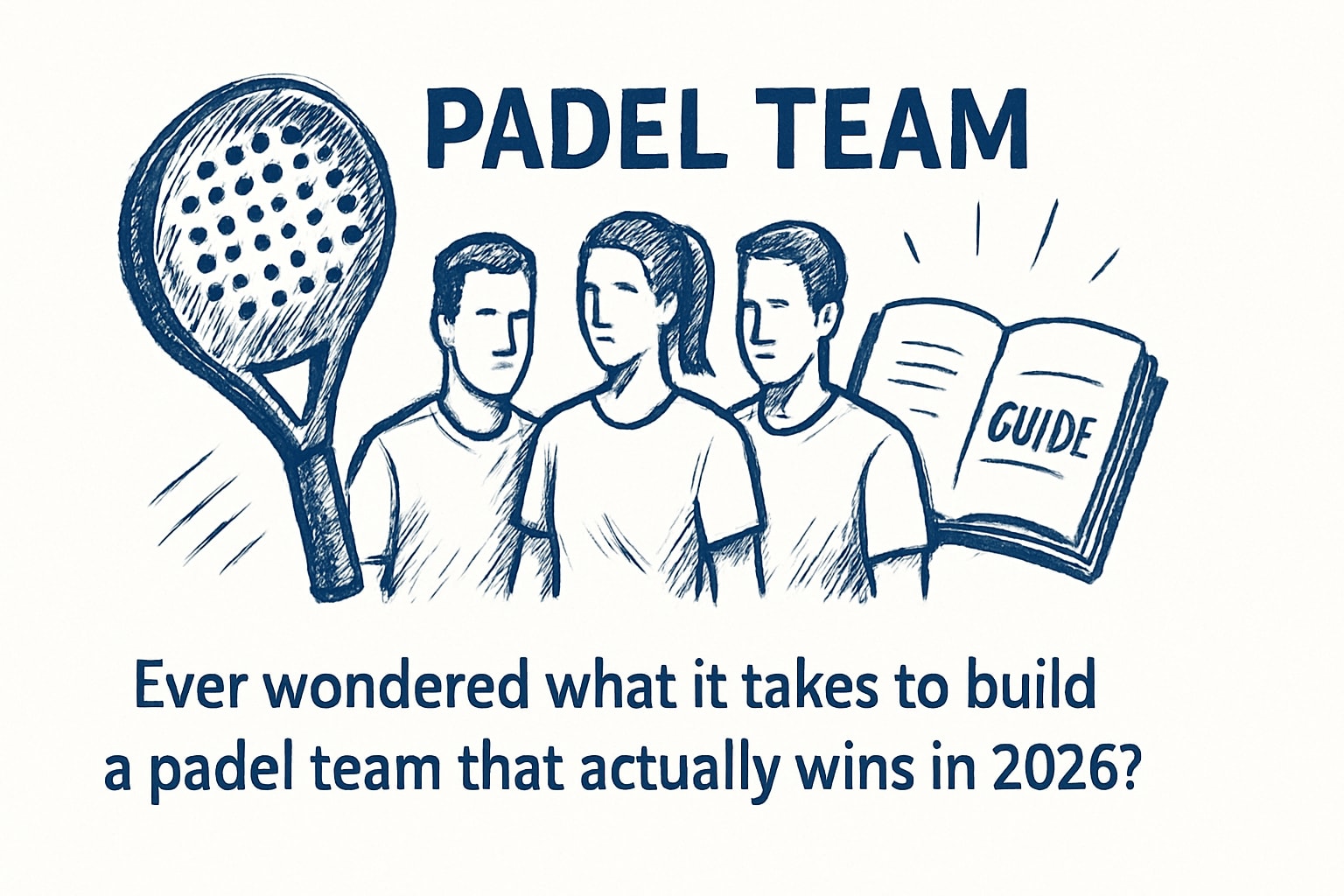
Ever look at a padel team and wonder how they make winning look easy? The secret is in the build, not just the talent. This guide gives you the real steps to create a padel team that fits together, plays hard, and actually wins—on any court, anywhere.
Here’s what you’ll get: how to structure your squad, scout the best players, run sharp training, boost chemistry, prep for big matches, and use the latest tech tools to stay ahead.
Padel is exploding right now. Everyone wants a spot at the top. The best teams are built, not born. Imagine rolling up with a crew where every match is fun, every role is clear, and you all love to win.
Ready to build your own winning squad for 2026? Let’s get started.
Understanding Padel Team Structure in 2026
Building a padel team in 2026 is all about the right structure. The format is changing, and what worked in the past just won't cut it now. You need the right mix of roles, age groups, and a focus on fair play if you want to compete anywhere—whether it's Paris, Miami, or Bali.
Key Roles and Team Formats
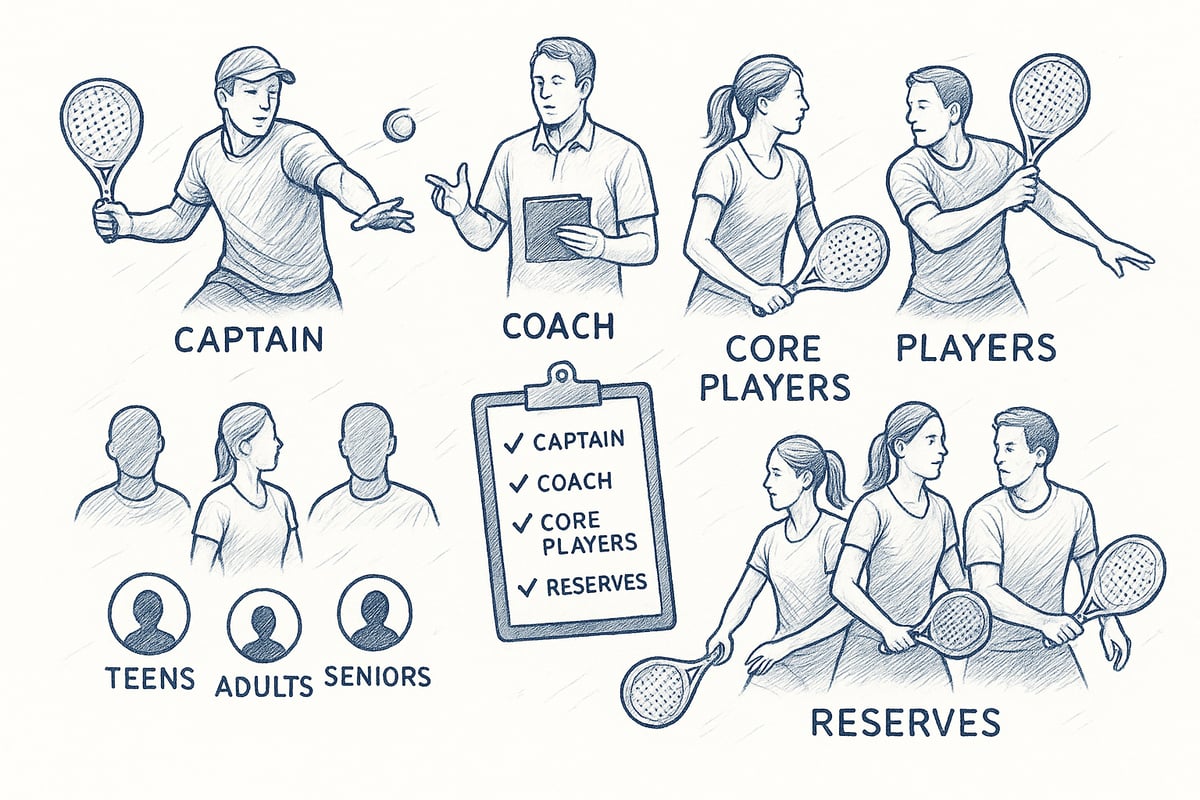
A winning padel team is like a puzzle—every piece needs to fit. Here's how top squads build their lineups:
Captain: Leads on and off the court, keeps the vibe positive.
Coach: Runs training, manages tactics, and supports every player.
Core Players: Your main four, ready for every big match.
Reserves: Four more, always prepped for injuries or hot streaks.
Most competitions now use 8-player pools. This is the new normal for international events. Why? It lets you swap players, cover for injuries, and try new doubles pairings fast.
Check out the US National Team—they went with an 8-player system and matched doubles pairs by strengths and weaknesses. This means less drama and better results.
There are open, senior, and junior divisions, plus mixed and single-gender formats. Clear roles keep your padel team focused and drama-free. Want more details on setting up roles and formats? Dive into these Padel team tips and guides for extra strategies.
Age Groups and Division Rules
A padel team isn't just about skill, it's about smart lineup choices. Age groups are strict:
Division | Age Range |
|---|---|
Seniors | 35+, 40+, 45+, 50+, 55+, 60+ (every 5 years) |
Juniors | 12-18 |
Open | Any age |
Mixed teams are allowed in some leagues, while others stick to single-gender. The US Senior padel team fielded six age groups at the 2025 PanAms. That meant every lineup had to factor in both experience and age.
Picking the right mix keeps your padel team future-proof and flexible, especially when you want to move juniors up or rotate seniors in for key matches.
The Importance of Compliance and Fair Play
Every legit padel team plays by the rules. That means:
Anti-doping: Follow WADA standards. Players need to know what substances are banned.
Registration: Make sure everyone has the right passport, residency, and ranking.
Code of conduct: Zero tolerance for drama—keep the squad focused.
The USPA set the standard in 2025 by sticking to the WADA list with no exceptions. If your padel team doesn't comply, you risk losing your spot before the first serve.
Stay sharp: eligibility checks and good conduct keep your padel team in the running, not on the sidelines.
Step 1: Scouting and Selecting the Right Players
Want a padel team that wins, not just shows up? It all starts with getting the right mix of players. This isn’t about stacking “stars.” It’s about finding the right talent, attitude, and chemistry so your padel team is ready for anything—rain, shine, or last-minute dropouts.
Identifying Talent and Building Depth
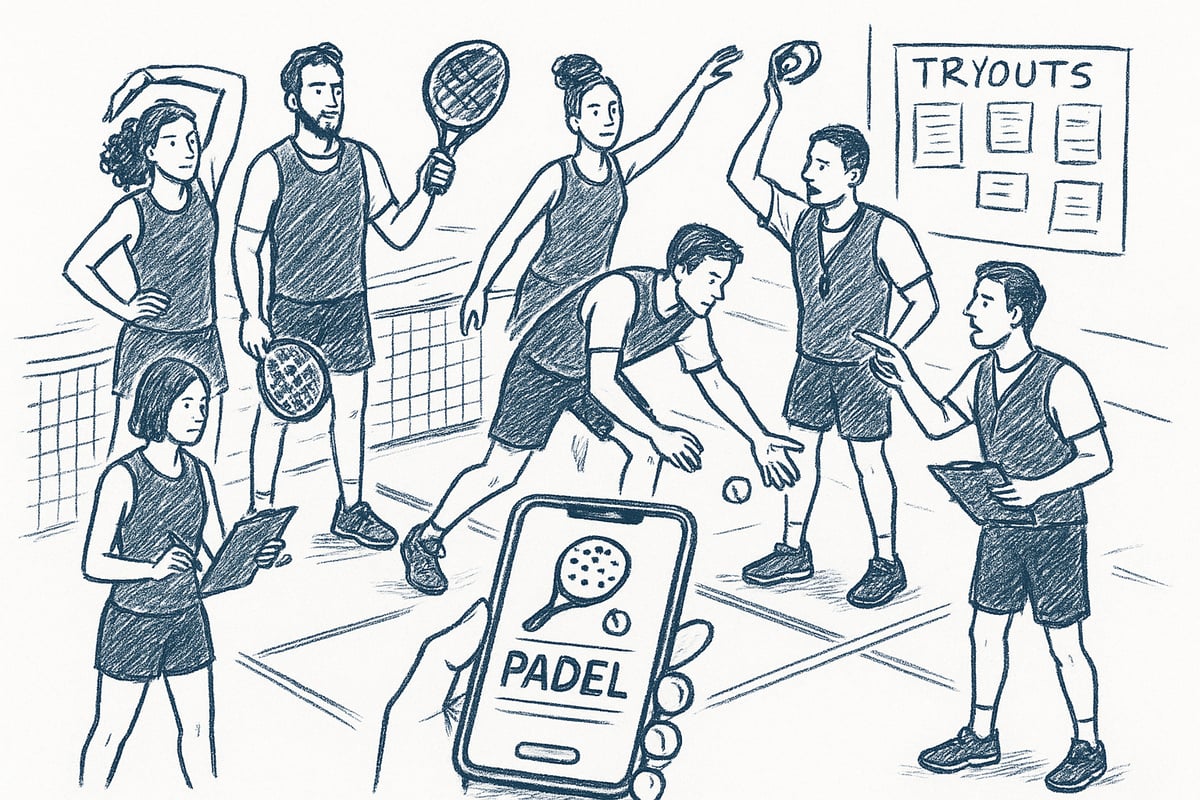
Building a padel team means finding more than just big hitters. Look everywhere: local clubs, weekend tournaments, even online platforms or city leagues. In Paris, for example, players use Join padel teams in Paris to connect, scout, and fill out squads fast.
Don’t just chase stats. Look for:
Players who show up on time and lift the vibe
People who listen, learn, and adapt
Consistency on the court, not just flashy shots
Check open, junior, and age-group rankings, but always watch how players handle pressure in real games. USPA selectors use circuit results, but they also care about who steps up when a teammate goes down. Depth matters—injuries, work trips, or someone on a hot streak can change everything.
A padel team with options is a padel team that never scrambles.
Tryouts, Trials, and Data-Driven Selections
Run open tryouts to keep things fair and transparent. Set up drills and mini-matches where everyone gets equal time. Use real metrics:
Win/loss records from games and sets
Fitness tests for speed and stamina
Communication skills on court
Film sessions with your phone or camera. Review footage with players—everyone sees what works and what doesn’t. National teams do this to spot hidden strengths and weaknesses. For your padel team, blind tryouts or guest evaluators help avoid personal bias, so the best players rise to the top.
The goal? Find who clicks under pressure, not just who looks good in warm-up.
Building a Balanced Squad
Stacking your padel team with only veterans or only rookies is a recipe for drama. Mix it up. Pair aggressive players with defenders. Match right-handed and left-handed players for smarter court coverage.
Diversity is your secret weapon:
Different ages and backgrounds mean fresh perspectives
Experience blends with raw energy for surprise combos
Chemistry beats “all-star” lineups every time
Look at the US Senior team: they blended age and skill to crush at PanAms. A balanced padel team bounces back from setbacks and adapts on the fly. That’s how you win the games that matter.
Step 2: Training, Tactics, and Team Chemistry
Training is where a padel team turns raw talent into real wins. The right sessions, smart tactics, and tight chemistry make all the difference when the pressure’s on. Want to prep your padel team like the pros? Here’s how the best squads do it.
Designing Effective Training Sessions
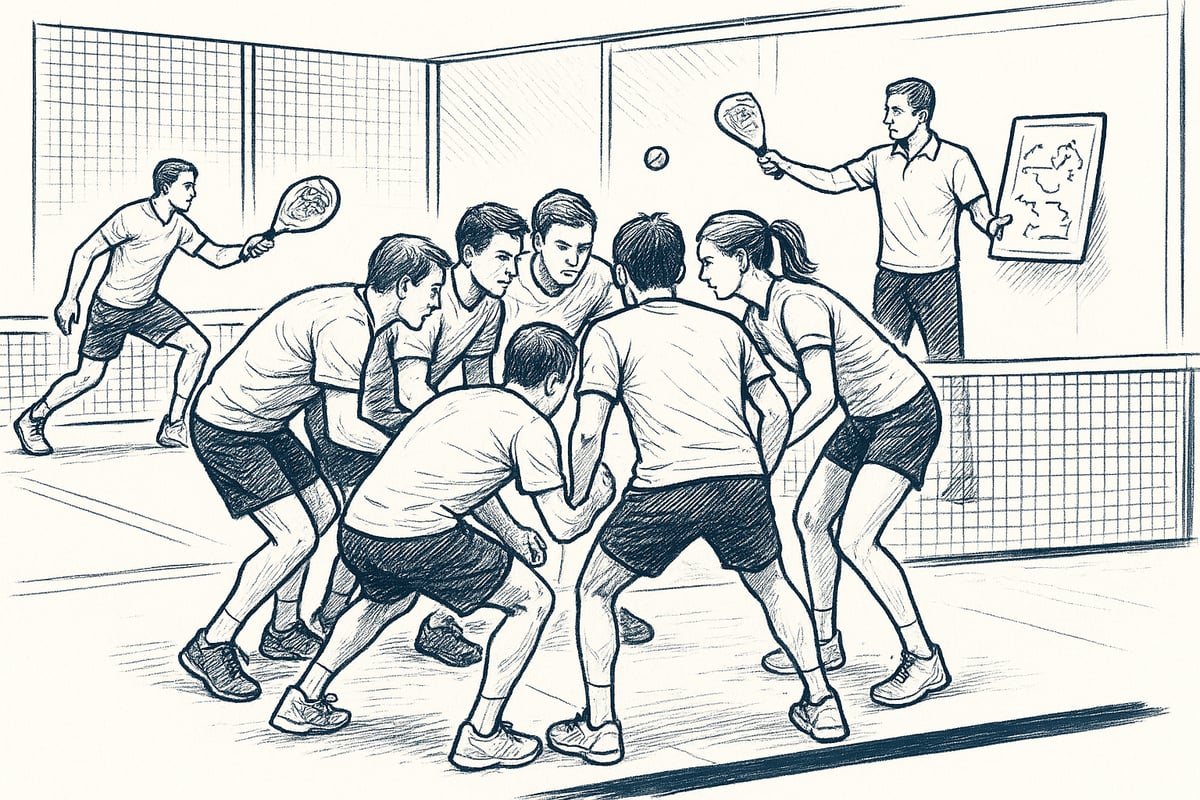
Every padel team needs sessions that actually build skills and chemistry, not just burn calories. The key is mixing up focused drills with real-game action. Try this breakdown:
Drills: Volleys, bandejas, lobs, and wall play. Fast reps, high energy.
Fitness: Injury prevention first, stamina second. Use interval sprints and resistance bands.
Small-sided games: 2v2 on half courts, rotating pairs every 10 minutes. More touches, more learning.
Tactical review: Record games, watch clips together, spot patterns.
Teams in the US and Europe use video to break down plays, tweak doubles strategies, and keep everyone accountable. For a full set of drills, check out the Padel Training & Drills Guide. It’s how squads in Miami, Paris, and Milan level up fast.
The best padel team sessions end with a cool-down and a quick chat. That’s where feedback lands and players get on the same page.
Developing Game Plans and Roles
A padel team is more than just skill. It’s about knowing your role and playing to your strengths. Here’s what works:
Assign roles: Who serves under pressure? Who takes the lob? Who leads on defense?
Practice doubles tactics: Work on communication, rotation, and covering each other’s weak spots.
Adjust to opponents: Use scouting reports, tweak pairings, and switch up strategies mid-match.
The USPA preps for world events by drilling set plays and mapping out serve-return patterns. Their goal? Win two out of three games in every pool. When every player on a padel team knows their job, there are fewer mistakes and more clutch points.
Game plans should be clear and simple. Overcomplicating kills flow. Keep roles consistent, but be ready to adapt when the match flips.
Building Team Chemistry On and Off Court
Chemistry is the secret sauce for any padel team. You want players who trust each other and know how to vibe—on court and off.
Social sessions: Grab dinners, organize team-building nights, or just hang after practice.
Communication drills: Practice signals, hand gestures, and talking through plays.
Conflict management: Set ground rules early so small stuff doesn’t blow up.
Junior teams from France and Italy build bonds at international events, sharing meals and routines. That’s why they bounce back in tough matches. A padel team that laughs together, talks honestly, and has each other’s backs will always have an edge when things get tight.
Team chemistry means resilience. When the match is close, trust and good vibes help you pull through.
Step 3: Preparing for Competition—Logistics and Mindset
Getting your padel team ready for real competition is more than just showing up. The secret sauce? Smart planning, a focused mindset, and taking care of bodies on and off the court. Here’s how the best squads do it.
Scheduling, Travel, and Tournament Planning
A padel team with sharp logistics plays sharper, period. You want every player focused, not stressed about flights or forgotten gear.
Use group chats and shared calendars so everyone’s in the loop.
Book travel early for better rates and less drama.
Choose tournaments that match your padel team’s level and goals.
Plan recovery time after travel to keep legs fresh.
The US National Team, for example, lines up their entire calendar months ahead. No one’s left guessing. For more on how top teams keep logistics smooth and tech-powered, check out Padel Facility Management Best Practices.
Building a Winning Mindset
Pressure hits different in a close match. The right mindset flips the script for your padel team.
Run short visualization sessions before big games.
Set clear, simple goals for each match.
Practice staying calm on big points—breathe, reset, talk it out.
Use team huddles for motivation, not just tactics.
Remember that senior US squads at PanAms came back from brutal deficits with nothing but grit and belief. Build routines your padel team trusts, and watch those clutch points start falling your way.
Health, Nutrition, and Recovery
If your padel team wants to finish strong, bodies need to stay in top shape. Winning isn’t just about the first serve—it’s about who can still move well at the end.
Prep meals and snacks for match days: bananas, nuts, hydration tabs.
Schedule proper warm-ups and cool-downs, every single time.
Rotate players to avoid burnout and overuse injuries.
Book physio or stretch sessions after tough games.
Teams that stay healthy climb the rankings faster. USPA teams who focused on recovery had fewer injuries and better results. A fit, energized padel team is a winning padel team.
Step 4: Leveraging Technology and Community Tools
Want your padel team to run smoother than ever? Tech tools are your secret weapon. The right apps save time, kill confusion, and keep everyone in sync. No more last minute “where’s the game?” texts or missing stats. Let’s break down exactly what works, how to connect with the padel world, and the fastest way to fill your squad for any pickup or tournament.
Using Apps and Platforms for Team Management
Every successful padel team uses digital tools to stay tight. Group chats (WhatsApp, Telegram) keep everyone updated on practice times and lineup changes. Shared calendars like Google Calendar mean nobody forgets a match or double books.
Here’s how smart teams keep it simple:
Schedule everything: Practices, games, recovery sessions all go in one shared calendar.
Instant alerts: Send last-minute updates or changes with one tap.
Track stats: Use spreadsheets or performance apps to log wins, losses, and who’s hot.
Tool | Purpose | Example Use |
|---|---|---|
Group chat | Announce lineups | |
Google Calendar | Scheduling | Block out tournaments |
Video Review Apps | Analyze tactics | Share match highlights |
US national squads rely on these basics before big events. The payoff? Less admin, more time for your padel team to actually play.
Connecting with Local and Global Padel Communities
To build a strong padel team, you need connections. The best squads always tap into local leagues, pickup games, and global tournaments. That’s how you find hidden talent and keep your roster deep.
Here’s what real teams do:
Join pickup games at clubs or through apps.
Hit up tournaments and clinics to network.
Share drills, tactics, or scouting notes with other teams.
In France, club leagues are prime spots for scouting. US teams often recruit from open sessions or local events. The more you connect, the easier it is to fill your padel team with the right mix of skills and personalities.
How to Find and Join Pickup Padel Games Instantly with Poteau
Finding the perfect padel team game is easy with Poteau. This app lets you search or create games anywhere—France, the US, Italy, even Bali. Set smart alerts for games that fit your level, location, and schedule.
Take the skill quiz to get your rating.
Match with partners, invite friends, or join solo.
Avoid mismatched games and fill squads fast.
Thousands use Poteau to build teams for tournaments. In Miami, players use Padel centers in Miami to organize sessions, tryouts, and social matches. It’s the easiest way to keep your padel team sharp, connected, and ready for any challenge.
Step 5: Sustaining Success—Retention, Growth, and Legacy
Keeping a padel team winning year after year is about more than just skill. You need players who want to stick around, new talent coming in, and a vibe that makes everyone proud to show up. Here’s how to keep your padel team sharp, tight, and ready for anything.
Keeping Players Engaged and Motivated
Retention is everything. If your padel team loses its core, you’re back at square one. Keep everyone locked in with regular feedback. After every match, run quick reviews. What worked? What needs work? Make it a habit.
Rotate leadership. Give different players a shot at calling pairings or leading warm-ups. New voices, fresh energy.
Celebrate wins, big or small. Host a team dinner after a clutch victory. Shout out the player who hustled hardest. The USPA does this—standout performers get recognition at the end of the season, and you can feel the difference.
Simple moves like these keep your padel team motivated. When players know their effort matters, they come back hungry for more.
Post-match feedback sessions
Leadership rotation (weekly or monthly)
Awards: MVP, Most Improved, Best Teammate
Social events after tournaments
That’s how you build a padel team people never want to leave.
Growing Your Squad and Developing New Talent
Even the best padel team needs fresh legs and new ideas. Run open sessions every month. Invite new faces—friends, club regulars, even rivals. Trial days keep the energy up and help you spot the next breakout star.
Mentor juniors. Pair up seniors and up-and-comers for drills. It’s how French and Italian clubs create a pipeline from juniors right into the main padel team. Partner with local schools or clubs to keep talent flowing in.
Look at how junior squads feed into senior teams in the US. That’s how you future-proof your padel team. The LTA Padel Strategy 2024-2029 lays out a clear plan for team growth and player development—worth a read if you want your team in it for the long haul.
Monthly open sessions
Mentorship pairings
Club and school partnerships
Talent pipelines from junior to senior squads
Keep your padel team growing, and you’ll always have depth when it counts.
Building a Lasting Team Culture
A legendary padel team isn’t just about wins. It’s about what you stand for. Define your values early—respect, effort, inclusivity. Make it real: create annual rituals, custom shirts, or a team playlist.
Document your traditions. Maybe it’s a yearly team trip to Bali, or a post-finals pizza night in Paris. These memories stick.
Give back to your community. Run youth clinics after tournaments, or volunteer at local padel events. US teams do this all the time, and it builds loyalty that lasts. Want a blueprint for team chemistry and development? Check out M3 Padel Academy's Training Methodology—they’ve built a culture that churns out winners and keeps squads tight.
Set and share team values
Annual team events and gear
Community clinics and volunteering
Build a padel team culture that outlasts any lineup. That’s how your padel team makes a real mark.
You’ve got the blueprint for a winning padel team—now it’s time to put it into action. Whether you’re scouting new talent, dialing in tactics, or just want to keep your squad sharp between tournaments, nothing beats real match time. The best way to keep your crew fired up and improving is by getting everyone on court, playing with and against new faces, and building that chemistry. Ready to level up and see your squad come together? Grab your phone, lace up, and find a game near you. See you out there!