
Yellow Card in Soccer: Meaning and How Many Before a Red
By the Poteau Team · updated
IN SHORT
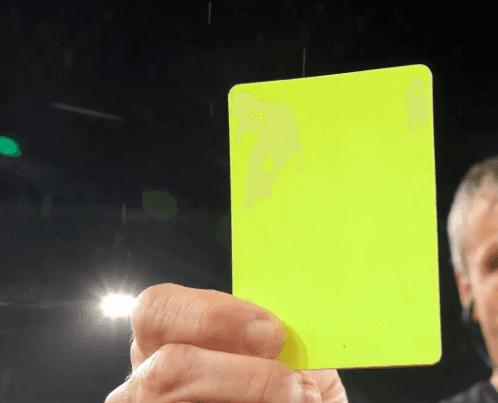
A yellow card is a caution. Two yellows in the same game make a red, and the player is sent off. It's shown for things like unsporting behavior, dissent, repeated fouls, delaying the restart or not keeping the distance at a free kick. Many competitions also suspend a player after a set number of yellows across several games.
What does a yellow card mean in soccer?
A yellow card is a caution. The player stays on the field, but the referee writes their name down.
Two yellows in the same game make a red: the player is sent off and the team plays with one fewer.
What gets you a yellow card
Law 12 lists the cautionable offenses. The common ones:
Unsporting behavior: a reckless foul, diving, a tactical foul to stop a promising attack.
Dissent by word or action, arguing with the referee.
Persistent fouling.
Delaying the restart of play.
Not keeping the distance at a free kick, corner or throw-in.
Entering or leaving the field without the referee's permission.
How many yellow cards before a red?
Two in the same game. The referee shows the second yellow, then the red.
Across games, it depends on the competition. Most leagues suspend a player after a set number of yellows. At the FIFA World Cup, two yellows in two different games mean a one-game suspension.
Does a yellow card carry over?
Within a game, yes: a player on a yellow plays carefully, because one more means a red.
Between games, yellows add up until the competition clears them, often at a fixed stage of the season or tournament.
Yellow cards for coaches
Since 2019, team officials can be shown yellow and red cards for misconduct on the bench, like dissent or leaving the technical area.
Yellow card or just a foul?
Most fouls get a free kick and nothing else. The referee goes to the yellow when the foul is reckless, meaning the player ignored the danger to the opponent, or when it stops a promising attack.
A foul with excessive force, which endangers the opponent, is serious foul play and a straight red instead.
Where the yellow card comes from
Cards were introduced at the 1970 World Cup. English referee Ken Aston thought of them after a 1966 game where cautions got lost in translation, and took the colors from traffic lights.
In a pickup game
Pickup games rarely have a referee. Players call fouls themselves and settle arguments on the spot.
On Poteau, a yellow card goes to a player who drops out of an almost full game at the last minute. Two yellows make a red, which blocks access to the app.
The Poteau Team